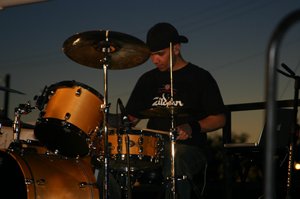
If you’re serious about becoming a skilled drummer, building a strong and consistent drum practice routine is essential. Practice isn’t just about putting in the hours — it’s about working smart, staying motivated, and pushing your boundaries in focused, intentional ways.
Not sure where to start? Great news: Whether you’re a total beginner or leveling up your skills, a practice routine will help every step of the way.
- Develop speed, control, and coordination faster by using a structured daily practice plan.
- Avoid burnout and plateaus by mixing variety into your routine using proven practice methods.
- Track your progress with purpose and confidence, knowing every session has a goal.
In this guide, I’ll break down the basics of a well-balanced drum practice routine. You’ll learn how to organize your time, what skills to focus on, and how to make each session count — whether you’re behind an acoustic set, on a pad, or rocking an electronic kit in your bedroom.
Table of Contents
- Setting Practice Goals
- Warm-Up Essentials
- Technique Practice
- Grooves & Time Feel
- Learning Songs
- Full Practice Routine Plan
- Tools to Boost Your Practice
- Conclusion
- FAQs
Suggested Products to help you #win at drumming:
- Alesis Nitro Max Electronic Drum Set – A perfect practice solution for drummers who need space-friendly and quiet electronic drumming at home, loaded with sounds and drum coaching tools.
- Evans RealFeel 2-Sided Practice Pad – One of the most trusted practice pads in the world, giving you both realistic rebound and quiet resistance for versatile warm-ups anywhere.
- Donner Drum Sticks 5A Maple (4 Pairs) – Affordable and balanced drumsticks perfect for daily practice without worrying about breaking expensive sticks.
- Korg MA-2 Digital Metronome – A compact, reliable metronome with visual feedback for improving your timing and groove accuracy in every session.
Setting Practice Goals
Before jumping into drumming blindly for hours, define what you want to achieve. Are you trying to improve speed, independence, or prepare a challenging song for a gig?
Set goals that are specific, trackable, and time-based. For example, “Play the paradiddle at 100 BPM cleanly for two minutes” is better than “get better at rudiments.”
Here’s a quick breakdown of effective goal types:
| Short-Term | Mid-Term | Long-Term |
|---|---|---|
| Learn one new groove today | Play a full song by end of week | Play a live gig or record Demo |
Warm-Up Essentials
A 5–10 minute warm-up should open every practice session. This kickstarts your technique, improves muscle memory, and reduces the risk of injury. For more ideas, check out 10 Powerful Drum Warm Ups to Boost Speed and Control.
Best warm-up tools
The Evans RealFeel Practice Pad is ideal for this stage. Start slowly, focusing on form and relaxation—not speed.
- Single strokes on pad or snare
- Paradiddles at various dynamics
- Flams and drags with consistent spacing
Technique Practice
Most drummers struggle here: Hands and feet don’t move how we want. That’s where focused technique drills come in. To really dial in your rudiments, explore Unlock Faster Hands: Best Drumming Speed Drills That Work.
Rudiments and coordination
Focus on one rudiment per day and apply it across three surfaces (snare → toms → kick via linear phrasing). Use a metronome—like the Korg MA-2 Digital Metronome—to stay honest with tempo and accuracy.
Hand-foot independence
Practice simple ostinatos — for example, playing quarter notes on hi-hat with your foot while working hand combinations. Start slow. Subdivide with your voice if needed!
Grooves & Time Feel
Playing fast is one thing. Playing in the pocket? That’s where true pros shine. Once your technique is brushed up, it’s time to groove. If you’re ready to level up your rock beats, read Master Rock Drumming Techniques: Pro Tips for Killer Grooves.
Groove builders
Divide groove practice by genre:
- Rock: Focus on consistent backbeats and eighth-note hi-hats.
- Funk: Explore syncopation, ghost notes, and sixteenth-note subdivisions.
- Jazz: Swing ride pattern + comping with snare and bass drum.
Record yourself playing simple grooves over a click and critically listen back. You’re aiming for feel and consistency more than flashy fills.
Learning Songs
Choose familiar songs that challenge but don’t overwhelm you. Loop smaller sections before attempting the whole track.
Tips for success
- Slow it down: Use software or apps to reduce tempo without changing pitch.
- Segment practice: Verse only → Chorus only → Combine sections.
- Play over the recording: Matching the feel helps develop musical timing.
If you’re practicing late at night or in a shared space, consider an electronic kit like the Alesis Nitro Max.
Full Practice Routine Plan
Now let’s put it all together. Here’s a balanced one-hour routine suitable for beginner to intermediate drummers:
| Time | Activity |
|---|---|
| 0:00–0:10 | Warm-up (singles, doubles, rudiments) |
| 0:10–0:25 | Technique work (hands, feet, independence drills) |
| 0:25–0:40 | Groove practice (focus on specific genre or time feel) |
| 0:40–1:00 | Song study or creative exploration (covers, improvisation) |
Use a stopwatch, keep notes in a journal, and vary weekly goals so things don’t get stale.
Tools to Boost Your Practice
Don’t rely on effort alone — the right gear makes focused practice fun and effective. Here are a few that I’ve personally used, and often recommend to students.
- Donner Drum Sticks 5A: Having multiple solid sticks around lets you rotate fresh pairs and experiment with grip, weight, and rebound.
- Practice pad stand or snare stand: Keep your pad at ideal height and angle to support proper hand position.
- Headphones or in-ears: Crucial when playing on electric kits or with backing tracks so you can hear every nuance.
Conclusion
Consistent, intentional drum practice is the difference between just “keeping time” and truly creating music behind the kit. Start with what you can manage — even 30 minutes a few days a week builds real muscle memory over time.
Stay curious, track your wins, and don’t beat yourself up during plateaus. Everyone grows at their own pace — your job is to stay in the game.
Grab a solid practice pad, cue up a metronome like the Korg MA-2, and start building your daily drum routine today.
FAQs
What is the best drum practice routine for beginners?
Start with short, focused sessions — warm up, practice basic rudiments with a metronome, and play along to simple rock beats. A routine like 10 minutes of technique, 10 minutes of grooves, and 10 minutes of song play-along is highly effective for early progress. For a full guide, read How to Play Drums for Beginners: Learn Easy Drum Basics.
How often should I practice drums to improve?
Consistency beats intensity. Practicing 20–30 minutes daily gives better results than a three-hour burst once a week. Set a realistic schedule you can stick to and increase time as your stamina builds.
What gear do I need to practice drums at home quietly?
Use a practice pad for quiet stick work, and an electronic drum kit like the Alesis Nitro Max for full-kit playing with headphones. Low-volume cymbals and mesh drum heads are also ideal for apartments or late-night sessions.
Do I need a metronome for drum practice?
Absolutely. A metronome trains your inner clock, improves steady timing, and helps you internalize tempo. Devices like the Korg MA-2 offer visual cues that are especially great for beginners.
How do I stay motivated in my drum practice?
Set short-term goals, record your progress, and reward milestones. Learning songs you love or drummers you admire can make practice more fun and purposeful. Adding variety each week keeps the routine fresh.
Are practice pads worth it?
Yes—especially for building technique and warming up. Pads like the Evans RealFeel offer realistic stick response so you can develop control, stick speed, and accuracy without noise complaints.
Can I learn drums without a full drum set?
Definitely! Practice pads, rudiments, and hand-foot coordination work go a long way. Even air-drumming to tracks builds muscle memory. When you eventually move to a kit, you’ll transfer skills quickly.